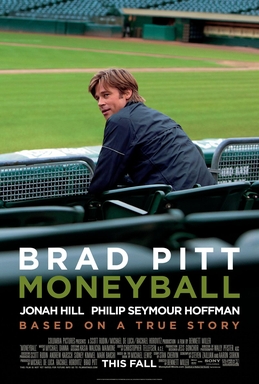
I don't like to go too in-depth when reviewing movies released by my own studio, but I do want to just share a couple of thoughts on Moneyball which I saw last night. We all know I love inspirational sports movies about sports that I don't like, and Moneyball isn't really an inspirational sports movie, but damn if it isn't about baseball. Here's how little I know about baseball. Freshman year of college I bought a cute green shirt at a thrift store that said "Athletics" and had a baseball on it. I was rather emo at the time and had a penchant for ironic t-shirts from the boys' section of the Goodwill. When people kept asking me if I was from Oakland, I couldn't understand why (I thought it was just like an elementary school's P.E. department shirt). While Moneyball is largely about how statistics factor in to major league baseball, which I didn't quite follow, I still really enjoyed watching the movie. Brad Pitt was excellent in it, the writing was very impressive, and I can't wait to see more and more of Chris Pratt. I'll admit that a movie about baseball being over two hours long doesn't help you forget that baseball is super boring, but even what seemed like superfluous scenes were great.
Now onto something superficial: Philip Seymour Hoffman is four years younger than Brad Pitt but looks about twenty years older. I continue to love him more than Pitt, but man were their scenes together jarring.
Tuesday, September 20, 2011
Come learn from my vast wisdom!
Attention Los Angeles area readers: Tonight I will be speaking at an event in West L.A. called "Moving On Up! The Young Alum Panel on Getting Hired in Hollywood." This is a 21+ event hosted by the Claremont Entertainment Mafia, an alumni resource for graduates of the Claremont Colleges working in the entertainment industry. Claremont students who are 18+ are welcome, just let the CEM members at the door know you're a student.
So Claremont alumni, and interested friends, join me tonight at 7pm at The Joint for this panel and some mingling.
The Joint
8771 W. Pico Blvd. at Robertson
Event description:
A successful career in Hollywood is exciting and lucrative, but how exactly does one begin?
Claremont Entertainment Mafia has assembled a panel of three of our most promising young alums - future movers and shakers - to discuss their own experiences on getting hired and getting promoted in the industry.
Join us for an evening where we will share anecdotes, advice, and take your questions regarding all aspects of the Hollywood ...hiring and promotion process, as well as the day-to-day grind.
DEVIN RAPSON (PO '09) got his first taste of the industry as a PA on Scooby Doo 4, in addition to interning with Oscar-winning Pomona alum Jim Taylor. He ran the feature department as coordinator at Landscape Entertainment with Bob Cooper, and recently has been hired to the prestigious Paradigm Talent Agency.
KATHERINE SPADA (CMC '08) began her career as assistant to Universal EVP Peter Cramer. After traveling the world, she currently works at Columbia as assistant to EVP of production Elizabeth Cantillon, working on such projects as The Girl with the Dragon Tattoo and the next film in the James Bond franchise.
JAVAN TAHERKHANI (CMC '08) moved up the cutthroat CAA ladder, from mailroom to floater to assistant, where he worked with powerhouse packaging agent Rob Kenneally. Now at Media Rights Capital, he works closely with the leadership of the television division to identify, develop, produce and sell premium content.
The panel will be moderated by Justin Huang, PO '09.
So Claremont alumni, and interested friends, join me tonight at 7pm at The Joint for this panel and some mingling.
The Joint
8771 W. Pico Blvd. at Robertson
Event description:
A successful career in Hollywood is exciting and lucrative, but how exactly does one begin?
Claremont Entertainment Mafia has assembled a panel of three of our most promising young alums - future movers and shakers - to discuss their own experiences on getting hired and getting promoted in the industry.
Join us for an evening where we will share anecdotes, advice, and take your questions regarding all aspects of the Hollywood ...hiring and promotion process, as well as the day-to-day grind.
DEVIN RAPSON (PO '09) got his first taste of the industry as a PA on Scooby Doo 4, in addition to interning with Oscar-winning Pomona alum Jim Taylor. He ran the feature department as coordinator at Landscape Entertainment with Bob Cooper, and recently has been hired to the prestigious Paradigm Talent Agency.
KATHERINE SPADA (CMC '08) began her career as assistant to Universal EVP Peter Cramer. After traveling the world, she currently works at Columbia as assistant to EVP of production Elizabeth Cantillon, working on such projects as The Girl with the Dragon Tattoo and the next film in the James Bond franchise.
JAVAN TAHERKHANI (CMC '08) moved up the cutthroat CAA ladder, from mailroom to floater to assistant, where he worked with powerhouse packaging agent Rob Kenneally. Now at Media Rights Capital, he works closely with the leadership of the television division to identify, develop, produce and sell premium content.
The panel will be moderated by Justin Huang, PO '09.
Thursday, September 15, 2011
Warrior review at MediaBlvd
My review of Warrior has been cross-posted over at MediaBlvd Magazine. Enjoy!
http://www.mediablvd.com/magazine/this-is-sparta_201109153917.html
Wednesday, September 14, 2011
This... Is... Sparta!
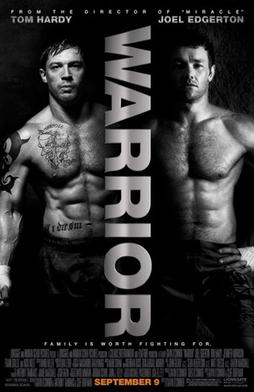
This weekend I went with a couple of my martial arts teammates to a late-night showing of Gavin O'Connor's sports drama Warrior. I've long held that inspirational sports movies are the highest art of storytelling, even when they are about sports I don't like or care about (inspirational movies and TV shows about football probably offer the highest ratio of satisfaction to level of disinterest about the sport). Given that I train six days a week in Muay Thai and Brazilian Jiu-Jitsu, and regularly head to my neighborhood bar for UFC matches, I was excited to finally have one of these movies about mixed martial arts, a sport I actually care about. O'Connor directed the well-loved Miracle, about the U.S. Olympic hockey victory against the Soviet Union in 1980. I found Miracle to be boring, but hoped that wouldn't be the case with Warrior. Luckily, it wasn't.
In Pittsburgh, former trainer and recovering alcoholic Paddy Conlon (Nick Nolte) returns home from church to find his younger son Tommy (Tom Hardy), drunk and self-medicated, sitting on his front stoop. It's been over a decade since escaping his abusive father, and Tommy's lost years remain a mystery he does not wish to discuss. Whatever his sorrows are, it's off to the gym for former Marine and wrestling champ Tommy to work out his anger. Meanwhile, in Philadelphia, Paddy's older son, ex-UFC fighter Brendan (Joel Edgerton) is a family man, teaching high school physics and struggling to pay the bills after his daughter had suffered from a heart problem. It's back to prize fighting for him, beating up hillbillies in parking lots to earn some extra cash, but he can't bring himself to tell his wife (Jennifer Morrison).
Both brothers are in need of money fast, so they independently find themselves training for Sparta, a single-elimination MMA competition with a five million dollar purse. It isn't until the final third of the movie that the leads even have a scene together, and this is part of what I liked so much about it. The audience is given just enough backstory about Tommy and Brendan's lives to know that they have been estranged since adolescence. We aren't spoon fed erroneous details about what happened after one brother left and one stayed behind, nor asked to care, really. What matters is the present, two brothers fighting for the money they need to start over, and approaching catharsis in the process. After watching two separate stories unfold, one about Brendan and his wife, and one about Tommy and his father, when they finally collide, all of the pent-up emotion has been saved for the octagon.
The fight scenes were excellently choreographed and shot. Edgerton and Hardy clearly got into shape by training with real fighters, and whenever they were in combat I winced at each round kick and submission as if I were watching a live match. [RIP Tom Hardy's neck, you will be missed.] This is not to say that the movie didn't have flaws, particularly with its performances. For a large chunk of the movie, Edgerton just speaks in a full-on Australian accent, and Hardy's take on emoting seems to consist primarily of pouting while growling, but I don't actually think the role required much more from him on that count. There are a few glaring logic problems, but they're worth overlooking. However, the emotional payoff in the final scenes of the movie is, well, cheesy. Even cheesier than I would usually expect or tolerate from a sports movie like this one, and I wasn't the only one in the theater laughing.
If you're a fan of martial arts, I assure you that Warrior leans more toward The Fighter than toward Never Back Down. It's not all the way at The Fighter's end of the spectrum, but it's still a very good movie. I'd definitely classify it as more of a family drama with sports than the reverse. Now, if you're not interested in martial arts, I think it's still a movie worth watching, which I say as someone who was obsessed with Friday Night Lights but would find watching football to be like having teeth pulled. But, for those made squeamish by fight sports, those scenes are definitely brutal. Finally, and most importantly, the movie is full of juicehead gorillas with their shirts off, so if that tickles your fancy, you're good to go.
Don't Think About It
Over at A Bright Wall in a Dark Room, you can find a very personal essay I've contributed on the subject of Drake Doremus' Like Crazy. Click through to visit the site; full text reposted below.
-----------
I was twenty, and had just graduated from college a few months prior. My internship had yielded an unbelievable job offer that everyone told me was foolish to pass up. However, I’d already planned a gap year to travel, and that was not something I wanted to turn down. So off I went to Australia for six months, and that’s where I met him.
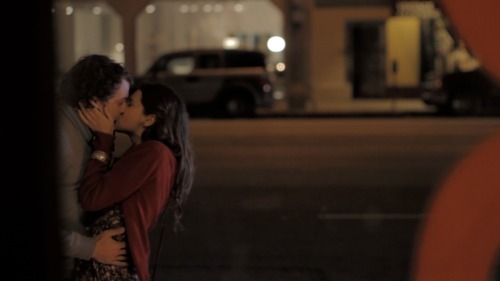
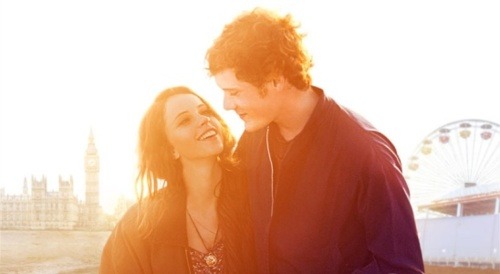
In Drake Doremus’ festival favorite Like Crazy, Anton Yelchin and Felicity Jones meet cute as college students in Los Angeles, and struggle to figure out what they should do after graduation when it’s time for her to move back to England. Before she’s due to leave, they have a romantic mini-getaway until, foregoing reason, she decides to outstay her visa. This decision changes the course of their love and their lives for the coming years.
He was sitting across my tiny table, having cooked us a pumpkin and roasted garlic risotto. We drank wine, there was a candle lit, and the air was cool outside my high-rise apartment. We spoke of traveling, and how we viewed the world. I felt a catch in my throat and excused myself to the bathroom. You’re in trouble, I told my reflection. Weeks later he was using my laptop and I worried he’d see in my search history, “how to make long distance relationships work.”
Yelchin’s Jacob knows it’s a bad idea for Jones’ Anna to stay in Los Angeles the summer after graduating. Perhaps neither truly realizes how serious the blowback will be from her decision to stay through the summer. More likely, they both realize there could be consequences too scary to face, but given the option to continue wallowing in each other for just a few more months, they are powerless to turn it down.
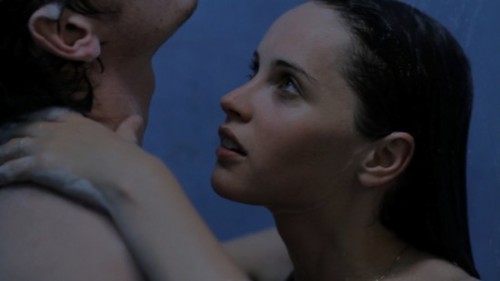
Anna and Jacob make plans for him to visit her, but they have ongoing lives that can’t be put on hold in between visits. Jacob is a carpenter with a growing furniture business; early in their relationship he gives Anna a lovingly made desk chair where she can write comfortably, the film’s title etched into the wood. In England, Anna pursues a job writing for a publication where she’ll have to plug away for a few years before she gets to where she wants to be. Phone calls never occur quite at convenient times for either of them, and they’re incurably out of sync with each other’s schedules.
One of us waits at the airport with flowers in hand, dressed up and well-groomed, eagerly scanning the faces of each haggard traveler coming off a long international flight. The other spends over an hour deplaning, lugging bags through customs and immigration, and then hastily trying to wash off the stench of travel in an airport bathroom before coming through the arrivals gate. In the span of a couple of weeks (all the time we could manage to get off work), we’d pack in visits with friends and family, sightseeing, fancy white tablecloth dinners, romantic mini-getaways, and lots and lots of serious talks about the future. More tears spilled in airports and on airplanes, and in cars driving away from them, than seems physically possible.
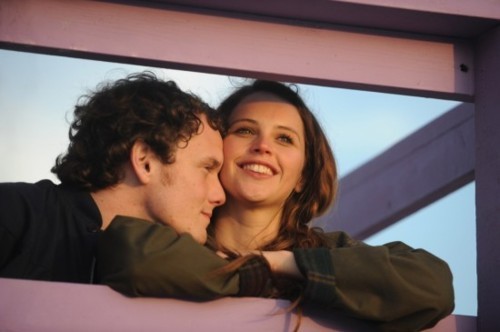
Anna’s parents can see how happy Jacob makes their daughter and are very supportive of their relationship, in whatever way they choose to pursue it. Of course, the suggestion of marriage comes up very early. Just like staying through the summer instead of leaving right after graduation, getting married seems like a very good idea.
“So, are you planning on moving to Australia?” “What would he do if he moved here?” “Wouldn’t it be easier if you just got married?” I can’t, I’m too young. I don’t want to get married for convenience. What about money; how would we make it work?
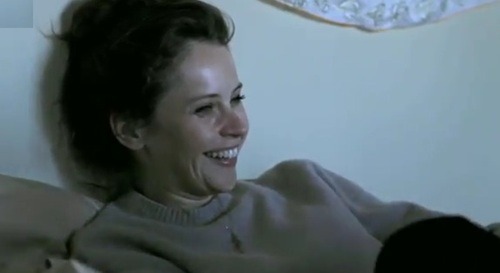
Jacob and Anna carry on with their lives. It’s so hard to miss each other, but they try their best to share in each other’s personal triumphs. Promotions, settling in to the fun activities of hanging out with their cultivated groups of friends, generally growing up. They begin to move on to new relationships, but they stay in each other’s thoughts, Anna’s chair and bracelet (engraved fittingly with “Patience”) remaining tokens of Jacob’s love that she can’t leave behind.
I remember being bitterly jealous of couples I saw holding hands at farmer’s markets or watching TV shows together over delivered pizza. We are so much better than they are, why don’t we get to be together, but they do? Maybe marriage is the answer… There is always value in thinking reasonably and thoroughly about major decisions like that.
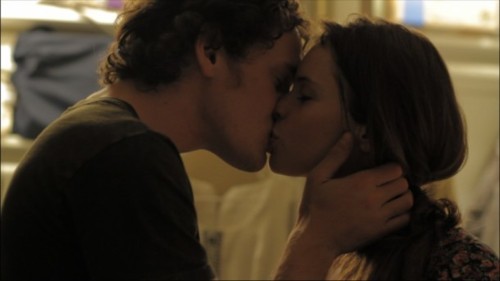
“Don’t think about it,” Anna tells Jacob when he voices concern about their future.
My long-distance relationship didn’t follow the same trajectory that Anna and Jacob’s did. The film peeks in on their lives, leaving them abruptly and ambiguously, but it’s easy for a romantic to infer that the struggles in the film paved the way for a happy future. I imagine that Like Crazy is to a long-distance relationship what Blue Valentine is to divorce - realistic to the point of being difficult to watch if you’ve lived through it. There are so many major threads that weave together a long-distance love: devotion, trust, emptiness, wist, heightened romanticism. Like Crazy captures all of these so well, but it especially reminded me of the willful ignorance of it all. The struggle to pretend that very real hurdles don’t exist because it’s just not fair for them to hold us back. The naive desire to believe that, should those hurdles be overcome, everything will carry on harmoniously.
I was twenty-three, riding in the passenger seat of his car on the way to the airport, heading back home after my last visit to Australia. I broke the silence with verbalized fantasies of all the things I couldn’t wait for us to do together when we were finally living together in the same city. At the airport I cried, as usual. Two years prior I’d made the same trip from Sydney, then only on the starting line of this long-distance marathon. That time, I’d sat against the window, embarrassed to be seen by flight attendants as I wept into the sleeve of my sweatshirt. Mercifully, a girl finally rushed down the aisle to be seated next to me. Her face was splotchy and she carried a bouquet of flowers as she left her Australian boyfriend behind to return home to South America. We cried together. I shared with her some of the Chupa Chups I’d packed for the flight. This time, I traveled alone.
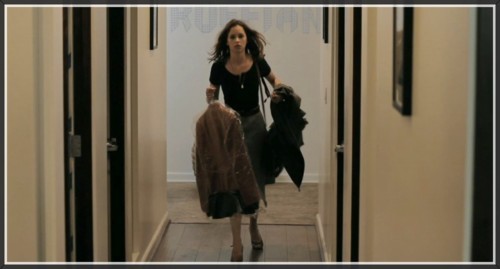
Katherine Spada is a Hollywood assistant and sometimes writer. When she’s not working, she trains in Muay Thai and Brazilian Jiu Jitsu. When the mood strikes, she contributes to MediaBlvd Magazine, and blogs at Kat Ex Machina.
-----------
DON’T THINK ABOUT IT.
by Katherine SpadaI was twenty, and had just graduated from college a few months prior. My internship had yielded an unbelievable job offer that everyone told me was foolish to pass up. However, I’d already planned a gap year to travel, and that was not something I wanted to turn down. So off I went to Australia for six months, and that’s where I met him.
In Drake Doremus’ festival favorite Like Crazy, Anton Yelchin and Felicity Jones meet cute as college students in Los Angeles, and struggle to figure out what they should do after graduation when it’s time for her to move back to England. Before she’s due to leave, they have a romantic mini-getaway until, foregoing reason, she decides to outstay her visa. This decision changes the course of their love and their lives for the coming years.

He was sitting across my tiny table, having cooked us a pumpkin and roasted garlic risotto. We drank wine, there was a candle lit, and the air was cool outside my high-rise apartment. We spoke of traveling, and how we viewed the world. I felt a catch in my throat and excused myself to the bathroom. You’re in trouble, I told my reflection. Weeks later he was using my laptop and I worried he’d see in my search history, “how to make long distance relationships work.”
Yelchin’s Jacob knows it’s a bad idea for Jones’ Anna to stay in Los Angeles the summer after graduating. Perhaps neither truly realizes how serious the blowback will be from her decision to stay through the summer. More likely, they both realize there could be consequences too scary to face, but given the option to continue wallowing in each other for just a few more months, they are powerless to turn it down.

Anna and Jacob make plans for him to visit her, but they have ongoing lives that can’t be put on hold in between visits. Jacob is a carpenter with a growing furniture business; early in their relationship he gives Anna a lovingly made desk chair where she can write comfortably, the film’s title etched into the wood. In England, Anna pursues a job writing for a publication where she’ll have to plug away for a few years before she gets to where she wants to be. Phone calls never occur quite at convenient times for either of them, and they’re incurably out of sync with each other’s schedules.
One of us waits at the airport with flowers in hand, dressed up and well-groomed, eagerly scanning the faces of each haggard traveler coming off a long international flight. The other spends over an hour deplaning, lugging bags through customs and immigration, and then hastily trying to wash off the stench of travel in an airport bathroom before coming through the arrivals gate. In the span of a couple of weeks (all the time we could manage to get off work), we’d pack in visits with friends and family, sightseeing, fancy white tablecloth dinners, romantic mini-getaways, and lots and lots of serious talks about the future. More tears spilled in airports and on airplanes, and in cars driving away from them, than seems physically possible.

Anna’s parents can see how happy Jacob makes their daughter and are very supportive of their relationship, in whatever way they choose to pursue it. Of course, the suggestion of marriage comes up very early. Just like staying through the summer instead of leaving right after graduation, getting married seems like a very good idea.
“So, are you planning on moving to Australia?” “What would he do if he moved here?” “Wouldn’t it be easier if you just got married?” I can’t, I’m too young. I don’t want to get married for convenience. What about money; how would we make it work?

Jacob and Anna carry on with their lives. It’s so hard to miss each other, but they try their best to share in each other’s personal triumphs. Promotions, settling in to the fun activities of hanging out with their cultivated groups of friends, generally growing up. They begin to move on to new relationships, but they stay in each other’s thoughts, Anna’s chair and bracelet (engraved fittingly with “Patience”) remaining tokens of Jacob’s love that she can’t leave behind.
I remember being bitterly jealous of couples I saw holding hands at farmer’s markets or watching TV shows together over delivered pizza. We are so much better than they are, why don’t we get to be together, but they do? Maybe marriage is the answer… There is always value in thinking reasonably and thoroughly about major decisions like that.

“Don’t think about it,” Anna tells Jacob when he voices concern about their future.
My long-distance relationship didn’t follow the same trajectory that Anna and Jacob’s did. The film peeks in on their lives, leaving them abruptly and ambiguously, but it’s easy for a romantic to infer that the struggles in the film paved the way for a happy future. I imagine that Like Crazy is to a long-distance relationship what Blue Valentine is to divorce - realistic to the point of being difficult to watch if you’ve lived through it. There are so many major threads that weave together a long-distance love: devotion, trust, emptiness, wist, heightened romanticism. Like Crazy captures all of these so well, but it especially reminded me of the willful ignorance of it all. The struggle to pretend that very real hurdles don’t exist because it’s just not fair for them to hold us back. The naive desire to believe that, should those hurdles be overcome, everything will carry on harmoniously.
I was twenty-three, riding in the passenger seat of his car on the way to the airport, heading back home after my last visit to Australia. I broke the silence with verbalized fantasies of all the things I couldn’t wait for us to do together when we were finally living together in the same city. At the airport I cried, as usual. Two years prior I’d made the same trip from Sydney, then only on the starting line of this long-distance marathon. That time, I’d sat against the window, embarrassed to be seen by flight attendants as I wept into the sleeve of my sweatshirt. Mercifully, a girl finally rushed down the aisle to be seated next to me. Her face was splotchy and she carried a bouquet of flowers as she left her Australian boyfriend behind to return home to South America. We cried together. I shared with her some of the Chupa Chups I’d packed for the flight. This time, I traveled alone.

Katherine Spada is a Hollywood assistant and sometimes writer. When she’s not working, she trains in Muay Thai and Brazilian Jiu Jitsu. When the mood strikes, she contributes to MediaBlvd Magazine, and blogs at Kat Ex Machina.
Thursday, June 9, 2011
Resisting the urge to write Erik/Charles slash fanfic...
Just a quick review because there's no way I can be impartial or really tell you anything you don't already know about Matthew Vaughn's X-Men: First Class. I really like The X-Men and I will be excited to go see any movie made about them. I even liked X-Men: The Last Stand and X-Men Origins: Wolverine more than a lot of people did. I didn't grow up reading comics but my sister did and she taught me about the world of mutants, and X-Men: The Animated Series was probably my favorite TV show when I was a kid. I wanted to grow up to be Wolverine!
So anyway, getting to see a side of Professor Charles Xavier and Erik Lensherr that I had not given much thought to, was really exciting for me. As always, it is cool to see the mutants use their powers, I got a chance to learn more about some characters I never knew that much about (Beast, Darwin, Banshee), and the 1960s setting added an interesting element. That said...this so did not go far enough.
The story of a younger Magneto and Professor X could/should have been a 2-3 film arc. The theme of discrimination against the mutants during the 1960s could have been used to tell a story against the backdrop of Civil Rights for African-Americans, which was a missed opportunity. And for a movie where I felt everything was resolved far too suddenly, parts seemed to drag on for ages.
This movie was incredibly cheesy, but not quite in a way that felt like they were trying to kitschily establish our beloved mutants in the swingin' '60s. Beast's post-transformation makeup was simply unimpressive, and the writers seemed to change their minds about characters' personalities every few pages. There were, obviously, massive logic holes, but this is a universe where a blue scaly woman can transform into anything she wants so, you know, I'll just let them be.
To paraphrase my friend, I am desperate for them to make a Young Magneto: Nazi Hunter movie. Michael Fassbender was easily the best part of the movie, and I wish Magneto's relationship with James McAvoy's Charles Xavier could have been given more time to grow. Also, if this story were expanded into multiple films, I feel like the relationship Raven/Mystique has with both Charles and Erik would have become a compelling storyline. Her brief scenes with Magneto were (oh man I was about to say "magnetic," what's wrong with me?) intriguing.
In any event, it got me pumped again about X-Men, and I fully intend to go back and watch last decade's trilogy again. Then every movie Michael Fassbender has ever been in, because damn.
So anyway, getting to see a side of Professor Charles Xavier and Erik Lensherr that I had not given much thought to, was really exciting for me. As always, it is cool to see the mutants use their powers, I got a chance to learn more about some characters I never knew that much about (Beast, Darwin, Banshee), and the 1960s setting added an interesting element. That said...this so did not go far enough.
The story of a younger Magneto and Professor X could/should have been a 2-3 film arc. The theme of discrimination against the mutants during the 1960s could have been used to tell a story against the backdrop of Civil Rights for African-Americans, which was a missed opportunity. And for a movie where I felt everything was resolved far too suddenly, parts seemed to drag on for ages.
This movie was incredibly cheesy, but not quite in a way that felt like they were trying to kitschily establish our beloved mutants in the swingin' '60s. Beast's post-transformation makeup was simply unimpressive, and the writers seemed to change their minds about characters' personalities every few pages. There were, obviously, massive logic holes, but this is a universe where a blue scaly woman can transform into anything she wants so, you know, I'll just let them be.
To paraphrase my friend, I am desperate for them to make a Young Magneto: Nazi Hunter movie. Michael Fassbender was easily the best part of the movie, and I wish Magneto's relationship with James McAvoy's Charles Xavier could have been given more time to grow. Also, if this story were expanded into multiple films, I feel like the relationship Raven/Mystique has with both Charles and Erik would have become a compelling storyline. Her brief scenes with Magneto were (oh man I was about to say "magnetic," what's wrong with me?) intriguing.
In any event, it got me pumped again about X-Men, and I fully intend to go back and watch last decade's trilogy again. Then every movie Michael Fassbender has ever been in, because damn.
Well, everyone knows Custer died at Little Bighorn. What this book presupposes is, maybe he didn't?
Okay, so I should state upfront that I'm a Woody Allen neophyte. Of his films, I've seen What's Up Tiger Lily, Bananas, Sleeper, Match Point, and now, Midnight in Paris. So yeah, I missed all the good ones, I guess, except Match Point. I've been told that I struggle more than others with separating the artist from the art, and I admit that to be true. I do try, though. I mean, let's take Roman Polanski. Rosemary's Baby is incredible, then his pregnant wife gets murdered by the Manson family, then he makes this amazing and twisted adaptation of Macbeth, and I also love Chinatown and The Pianist, but the man is a confessed child rapist and I can never forget about that even when I'm watching and loving his films. So you'll have to forgive me when I say that I don't ever really seek out Woody Allen movies because he totally creeps me out.
Anyway, I was told Midnight in Paris was "delightful," and many of my friends "loved it" and saw it multiple times. I was pleasantly charmed by it, and found it a quick, whimsical journey through Paris across time (the film is only 100 minutes long, including credits). The story is sweet and has a clever conceit involving time travel that is forgiven any logic questions because that's not the point of the movie. Owen Wilson continues to surprise me as a pretty one-note actor who nonetheless brings a sort of honesty to his roles that really draws me in (he was the best part of How Do You Know, fwiw). All of the acting in the movie is really charming, with pitch-perfect roles played by Rachel McAdams as Wilson's fiancée, Kathy Bates as Gertrude Stein, Alison Pill as Zelda Fitzgerald, and Marion Cotillard as MPDG ingenue Adriana. My favorite cameo was probably Adrien Brody as Salvador Dalí. Allen gives us a sparkling, spotless Paris that is most beautiful in the rain, where a lost-in-his-thoughts wealthy American can wander the streets at midnight without encountering a single vagrant or having his wallet stolen.
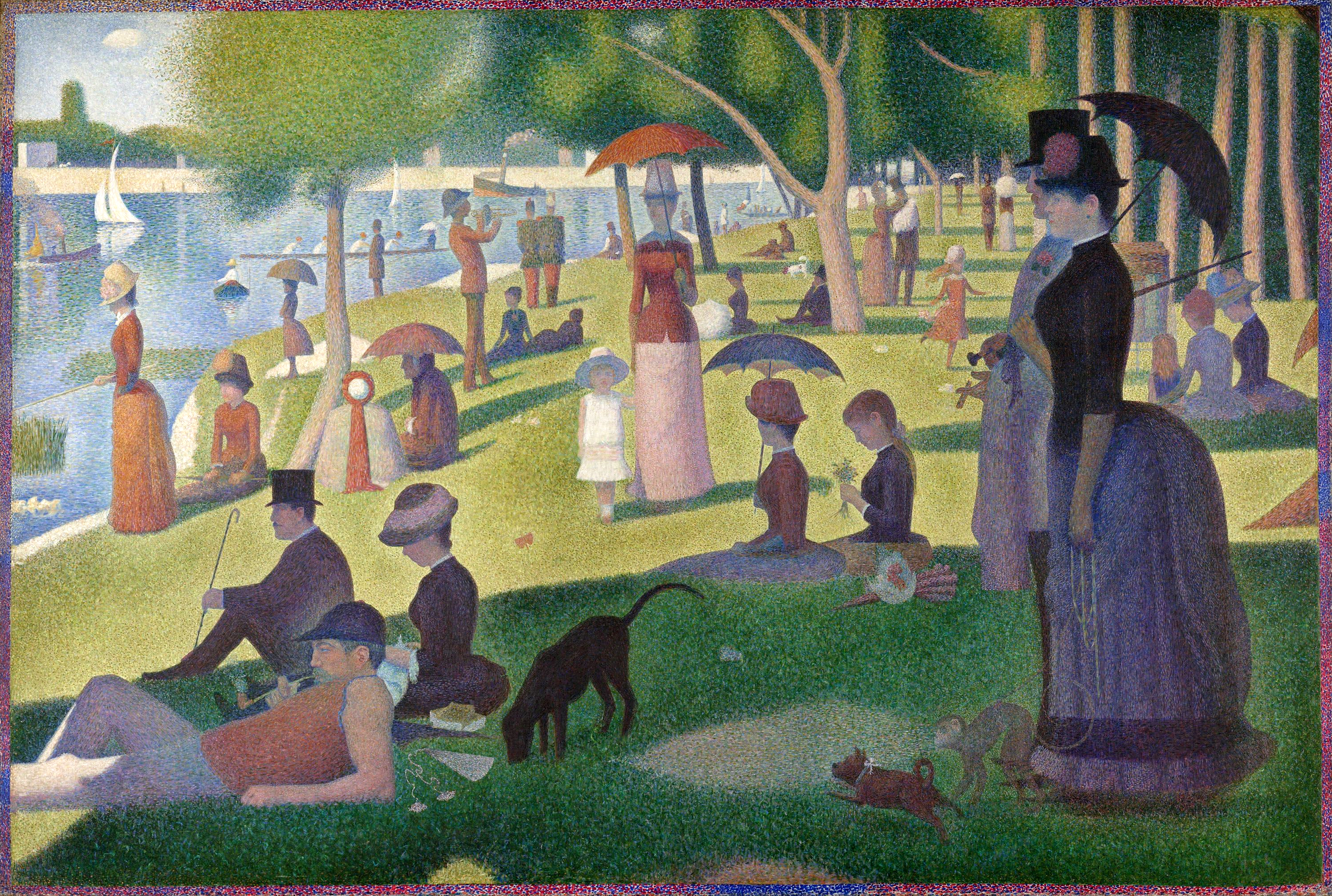
The film is about nostalgia, and treats the subject in a cute, reflexive way. Owen's modern-day screenwriter is nostalgic for the golden age of writers and artists gallivanting around Paris in the 1920s. 1920s-era Adriana is nostalgic for her city's Belle Époque, whose denizens Gauguin and Toulouse-Lautrec (sidebar: the casting director couldn't find one LP actor in France?) wax romantic about the Renaissance. It's a good theme, because who among us hasn't sat and listened to a haunting Gershwin tune and wanted to wake up in the Jazz Age, or gotten transfixed by Seurat's Un dimanche après-midi à l'Île de la Grande Jatte - 1884 and wanted to just melt into it? I've spoken with some of my friends about our Austen-inspired idealization of Regency Era England, which lasts for about five minutes before we realize that as ethnic minorities and women, our lives would actually be pretty terrible were we to be transplanted to Pemberley by magic.
Wilson's character does make a brief concession to the fact that life is better in a world with antibiotics in it, and overall, I believe he realizes that one must learn to feel positively about the modern age, because nostalgia is fantasy. Surely Paris' 1920s beauty is tempered by the hindsight of knowing what horrors would befall Europe a decade and a half later. And here's where my thoughts on separating the artist from the art come back in. Our protagonist idolizes Hemingway, Fitzgerald, Picasso, Degas, and others. Misogynist, misogynist, womanizer, sadist, etc. And all mindblowing artists representative of their time. Obviously their portrayals are not realistic; they are conjured by Wilson's character as manifestations of what he knows he needs to remember in order to write a great novel.
Let me know what you think about Midnight in Paris. What historical era or work of fiction do you wish you could be transported to?
Anyway, I was told Midnight in Paris was "delightful," and many of my friends "loved it" and saw it multiple times. I was pleasantly charmed by it, and found it a quick, whimsical journey through Paris across time (the film is only 100 minutes long, including credits). The story is sweet and has a clever conceit involving time travel that is forgiven any logic questions because that's not the point of the movie. Owen Wilson continues to surprise me as a pretty one-note actor who nonetheless brings a sort of honesty to his roles that really draws me in (he was the best part of How Do You Know, fwiw). All of the acting in the movie is really charming, with pitch-perfect roles played by Rachel McAdams as Wilson's fiancée, Kathy Bates as Gertrude Stein, Alison Pill as Zelda Fitzgerald, and Marion Cotillard as MPDG ingenue Adriana. My favorite cameo was probably Adrien Brody as Salvador Dalí. Allen gives us a sparkling, spotless Paris that is most beautiful in the rain, where a lost-in-his-thoughts wealthy American can wander the streets at midnight without encountering a single vagrant or having his wallet stolen.
The film is about nostalgia, and treats the subject in a cute, reflexive way. Owen's modern-day screenwriter is nostalgic for the golden age of writers and artists gallivanting around Paris in the 1920s. 1920s-era Adriana is nostalgic for her city's Belle Époque, whose denizens Gauguin and Toulouse-Lautrec (sidebar: the casting director couldn't find one LP actor in France?) wax romantic about the Renaissance. It's a good theme, because who among us hasn't sat and listened to a haunting Gershwin tune and wanted to wake up in the Jazz Age, or gotten transfixed by Seurat's Un dimanche après-midi à l'Île de la Grande Jatte - 1884 and wanted to just melt into it? I've spoken with some of my friends about our Austen-inspired idealization of Regency Era England, which lasts for about five minutes before we realize that as ethnic minorities and women, our lives would actually be pretty terrible were we to be transplanted to Pemberley by magic.
Wilson's character does make a brief concession to the fact that life is better in a world with antibiotics in it, and overall, I believe he realizes that one must learn to feel positively about the modern age, because nostalgia is fantasy. Surely Paris' 1920s beauty is tempered by the hindsight of knowing what horrors would befall Europe a decade and a half later. And here's where my thoughts on separating the artist from the art come back in. Our protagonist idolizes Hemingway, Fitzgerald, Picasso, Degas, and others. Misogynist, misogynist, womanizer, sadist, etc. And all mindblowing artists representative of their time. Obviously their portrayals are not realistic; they are conjured by Wilson's character as manifestations of what he knows he needs to remember in order to write a great novel.
Let me know what you think about Midnight in Paris. What historical era or work of fiction do you wish you could be transported to?
Subscribe to:
Posts (Atom)